博文

The Benefits and Uses of Stainless Steel Flanges

图片
 Stainless steel is used in many applications both from a domestic and industrial standpoint for good reason. It is resistant to corrosion, temperature resistant, easy to fabricate and looks good. Stainless steel flanges offer all these benefits and more. A vital connecting link for piping, valves and other equipment,  stainless steel flanges are essential in industries like gas, transport, water and food and beverage, as well as power generation and chemicals. There are several benefits to flanges in these industries: Easy Access Using flanges in industrial applications provides easy access for inspection, modification and cleaning, crucial in any application. No welding, painting or blasting Using flanges eliminates the need for the pipe spools to be welded. Painting and blasting are also not necessary, unlike other fittings and methods. Fast fabrication and ease of modification Numerous piping spools can be manufactured in a workshop with relative ease and speed. They...

Why You Should Use 316 Stainless Steel Rods

  The difference between 304 and 316 stainless steel is very commonly misunderstood, or not known at all, and can have a huge impact on the reliability of survey results, and what you’re achieving for your clients. Let’s explore this further. 304 stainless steel contains a mix of chromium and nickel and is slightly responsive to magnetic fields. The addition of the nickel (8-10.5%) modifies the physical structure of the steel and then, theoretically, makes it non-magnetic. However, through extended periods of continuous motion in one direction, and the resulting friction, grade 304 stainless steel can become slightly more magnetic. Additionally, if the steel alloy is mechanically deformed during the manufacturing process the internal structure of the steel may change causing the rods to be partly magnetic from the moment they leave your supplier’s warehouse. They haven’t even seen pay dirt yet. On the other hand, 316 type stainless steel is a molybdenum-alloyed steel and contains a...

Does 2205 duplex stainless steel rust?

 As with all corrosion-resistant alloys, 2205 duplex stainless steel can suffer corrosion when exposed to suitably corrosive conditions. As they contain a higher chromium content than standard 304/316 grades, their Pitting Resistance Equivalent Number (PREN) is higher, indicating increased resistance to pitting corrosion. For instance, the PREN for a duplex stainless steel (Sanmac 2205, SAF2205, 1.4462, F51/F60, S31803, S32205) is 34, whilst that for Alloy 316L (1.4404, S31603) is only 25. Therefore, an appreciable increase in resistance to pitting corrosion can be expected. Anbao Group  is a experienced manufacturer of  stainless steel pipe flanges ,carbon steel tubes,alloy steel tubes, 304/316 stainless steel tubes  ,stainless steel  304/316 round bars , duplex 2205 tubes & bars ,metal casting,forging and precision investment machining which means we can handle all your needs.We are professional casting parts OEM/ODM manufacture and supplier in china.Anbao...

How To Choose The Right Flange Types?

  COMMONLY USED BASIC FLANGES The most common and best flange types widely used for many purposes and in many sites are welding neck, slip-on, socket weld, lap joint, threaded, and blind flange. Welding Neck Flange These Flanges are very simple and easy to manage compared to proprietary connections. Their workability is superior, and they are the best design for high-stress service. The welding neck covers the thickness of a wall typically and pipes adjoining with them. The structure of these flanges is explicitly made to work with high pressure and elevated temperature. Some designs contribute a significant part in the smooth transition of pipes’ pressure, depending upon the welding neck flange’s integrity relative to the application. A small projection of the neck from the base is an obvious characteristic in their structure which helps in the strong bonding with the joint, and ultimately pressure of the liquid will flow smoothly according to the design. Certain things like the q...

Types Of Grade S31803 / S32205 Duplex Steel Flange

  An austenitic-ferritic stainless variant with a higher stress corrosion cracking resistance in comparison to regular austenitic 304 and 316 stainless, but with a lower toughness and impact strength. This category of material includes grades 2205, F51, F53, and F60. Duplex stainless has increased in popularity over the years due to its excellent chemical and mechanical properties versus their basic stainless counterparts, given especially that the cost differences are minimal now as the availability has increased. offers a wide range of Duplex Steel Flange, which has some excellent features to offer such as Lightweight, Tough construction, Dimensionally accurate, and so on. We also offer these products in different grades such as S32205 Duplex Flanges, S31803 Duplex Flanges, Super Duplex 2507 Flanges, and  S32750  Super Duplex Flanges. We have emerged in offering our valuable customers a wide array of our  Duplex Steel Slip On Flanges , where we also offer the same ...

Corrosion Resistance Of 2205 Duplex Steel pipe

  2205 duplex stainless steel is a cost effective solution for many applications where the 300 series stainless steels are susceptible to chloride stress corrosion cracking. Stress corrosion cracking occurs when stainless steels are subjected to tensile stress, while in contact with solutions containing chlorides. Increasing temperatures also increase the susceptibility of stainless steels to stress corrosion cracking.We have wide range of sizes in our stock of  2205 Duplex Stainless Steel Pipe  & 2507 Super Duplex Stainless Steel tube,S31803 Welded Pipes Tubes . 2205 steel has excellent corrosion resistance and is superior to grade 316, performing well in most environments where standard austenitic grades may fail. 2205’s low carbon content gives the grade a high resistance to intergranular corrosion and has better resistance to uniform, pitting and crevice corrosion due to its high chromium and molybdenum content.  As 2205 is a duplex stainless steel, the grade...

The Material Of Duplex UNS S31803/ S32205

图片
  Duplex UNS S31803/ S32205   are the most common duplex grades in the market. They have very good resistance to localized corrosion and stress corrosion cracking in combination with high mechanical strength. UNS numbers S31803 and S32205 represent alloys with more characteristics in common than distinct differences. Firstly, they are both stainless steels with similar elemental compositions. Both S31803 and S32205 belong to the duplex 2205 family, which means they comprise almost equal parts austenite and ferrite. Secondly, they are both extremely strong and durable alloys.They are widely used in oil & gas, hydro power, pressure vessels, pulp & paper, structural components and chemical tankers. The alloys are not intended to be used at temperatures above 300°C due to embrittlement. APPLICATIONS The main applications are for details with special requirements for high corrosion resistance. S31803/ S32205 are characterized by: • High resistance to stress corrosion cracki...

The Use of Duplex Stainless Steel Tubing in Heat Exchanger Service

 Duplex stainless steel tubing is characterised by high chromium (19–28%) and molybdenum (up to 5%) and lower nickel contents than austenitic stainless steels. The most used duplex stainless steels are the 2205 (22% Chromium, 5% Nickel) and the 2507 (25% Chromium, 7% Nickel); 2507 is known as “super duplex” due to its higher resistance to corrosion.To improve the performance of your industrial process heat exchanger, we always use duplex stainless steel tubing . Heat exchangers are key components for many industries, particularly in chemical and oil and gas plants where they play a vital role in process control. Industry professionals — from design engineers and fabricators to the in-plant operators who work with the equipment daily — seek new ways to improve heat transfer performance and extend the life of these units in corrosive environments. Many times, improvements are closely related to the tubing specified for use in their heat exchangers. To improve the performance of ...

What is seamless stainless steel pipe?

图片
  Seamless Stainless Steel Pipe   is made from a solid round steel ‘billet’ which is heated and pushed or pulled over a form until the steel is shaped into a hollow tube. Billets are procured both from indigenous suppliers and from abroad.  In Seamless stainless steel pipe, there are no welding or joints and is manufactured from solid round billets. The seamless stainless steel pipe is finished to dimensional and wall thickness specifications in sizes from 1/8 inch to 26 inch OD. Applicable in for High-pressure applications such as Hydrocarbon Industries & Refineries, Oil & Gas Exploration & Drilling, Oil & Gas Transportation and Air and Hydraulic cylinders, Bearings, Boilers, Automobiles

The Usuage Of 304 Stainless Steel Tubing

图片
 304 Stainless steel tubing is widely used in applications needing corrosion resistance, high-temperature, and/or high-pressure characteristics. Mechanical tube, pipe, and structural tube types of 304 grade stainless steel are all formulated with these properties. The 304 grade is an austenitic stainless steel that typically contains at least 18 % chromium and a minimum of 8 % nickel and is often referred to as 18-8.  Our customers for 304 stainless steel tube come from a wide variety of industries, so we have experience working with all kinds of applications. It is especially popular in the food, beverage, dairy, and chemical industries, thanks to its corrosion resistance and hygiene properties that make it suitable for use with citric acid, crude oil, and inorganic chemicals. It is also common in parts that will be used in welding, polishing, machining, or grinding. 304 stainless steel properties include: Outstanding weight-bearing properties High corrosion resistance Stron...

What's The Use Of Honed Barrel

图片
  Honed barrel  is well known as hydraulic cylinder tube in many industries. This is because honed tubes are the most important materials of manufacturing hydraulic cylinders. And as this kind of tubing is usually honed in tube inside diameter, it is known as honed ID tubing also. honed barrel are used as they have a precise geometric concentricity and parallelism through the length of the barrel. The smoothness of the inside of the barrel improves the storage of oil, increasing the working life of a cylinder.honed tubes suitable for various kinds of Precision Mechanical Tube, Honed Cylinder Tubing and Hydraulic Cylinder, Construct use Multi Joint Tube, Steel Axis Pipe, Injection Machine and Robotic Arm.

The Benefits and Uses of Stainless Steel Flanges

  Stainless steel is used in many applications both from a domestic and industrial standpoint for good reason. It is resistant to corrosion, temperature resistant, easy to fabricate and looks good. Stainless steel flanges offer all these benefits and more. A vital connecting link for piping, valves and other equipment,  stainless steel flanges   are essential in industries like gas, transport, water and food and beverage, as well as power generation and chemicals. There are several benefits to flanges in these industries: Easy Access Using flanges in industrial applications provides easy access for inspection, modification and cleaning, crucial in any application. No welding, painting or blasting Using flanges eliminates the need for the pipe spools to be welded. Painting and blasting are also not necessary, unlike other fittings and methods. Fast fabrication and ease of modification Numerous piping spools can be manufactured in a workshop with relative ease and spee...

What Is Blind Flange?

图片
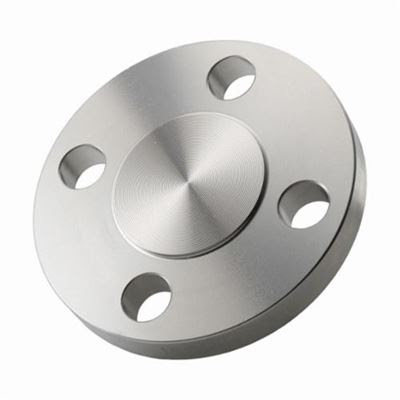
  Blind flange  is like a flange cover, also called blind disk or flanged pipe plug. Blind flange has no holes in the center, for to seal the pipe opening. So it’s function is the same as the pipe plug or the pipe cap. The difference is blind flange is a detachable equipment, easy to replace or do maintenance. Where to use blind flanges? The blind flange’s the major function is totally to separate the production medium. Which preventing the shut-off valve close not tightly, then affecting production, and even causing accidents. At the location where is requires isolation should place the blind flange, such as at the equipment nozzle. Between the front and rear of the shut-off valve or between the two flanges, it is often recommend to use a figure 8 blind flange (figure-8 blank); For single-use parts such as pressing and purging usually use common round blind flange. Sealing Surface There are many types of sealing surfaces, such as flat, convex, concave and convex, grooved surf...

Top 6 Common Flange Types

图片
  The most used  flange  types according to ASME B16.5 are: Welding Neck flange, Slip On flange, Socket Weld flange, Lap Joint flange, Threaded flange and Blind flange. Slip-on Flanges  - are all bored slightly larger than the O.D. of the pipe. Weld Neck Flanges  - is normally referred to as the high hub flange. Blind Flanges  - available to seal both pipes and vessels Lap Joint Flanges  - available in a range of sizes to pair with stub end fittings for easy dismantling Threaded Flanges  - engineered to fit pipes with external threads for weld-free fits Socket-weld Flanges  - designed with a socket fit and top weld for ideal inner flow in pipe systems Custom pipe flanges can be manufactured from a wide variety of  materials  and material grades. Carbon Steel flanges - the main material is carbon steel flange or end flange connectors. Stainless Steel flanges - F304 F304L F316 F316L 316Ti, Copper etc. Alloy Steel flanges- accord to AS...

What Is Welding Neck Flange

图片
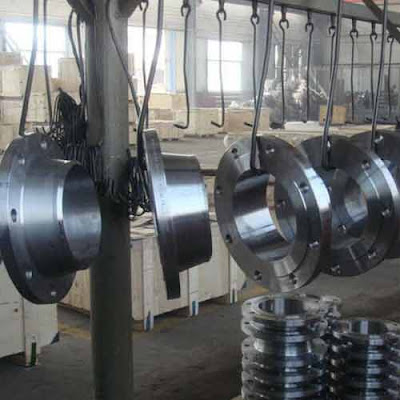
Welding Neck Flanges  are easy to recognize at the long tapered hub, that goes gradually over to the wall thickness from a pipe or fitting. The long tapered hub provides an important reinforcement for use in several applications involving high pressure, sub-zero and / or elevated temperatures. The smooth transition from flange thickness to pipe or fitting wall thickness effected by the taper is extremely beneficial, under conditions of repeated bending, caused by line expansion or other variable forces. These flanges are bored to match the inside diameter of the mating pipe or fitting so there will be no restriction of product flow. This prevents turbulence at the joint and reduces erosion. They also provide excellent stress distribution through the tapered hub and are easily radiographed for flaw detection. This flange type will be welded to a pipe or fitting with a single full penetration, V weld (Buttweld).

what is the forged shaft manufacturing process

图片
 Like casting processes, forging has also been used since the beginning of civilization to produce metallic goods. In its present form, forging is defined as the process in which metals are shaped using compressive forces.  The general steps of an open die forging process can be enumerated as follows: Rounding of Stock Primarily the heated metal is fixed to an anvil and compressed with lateral and/or vertical dies to form a cylindrical shape. This step is important because it grants structural stability and improves the physical strength of shaft forgings . Setting Dimensional Standards Simultaneous action of multiple dies results in the shaping of a cylindrical metal rod to the desired length, thickness, and shape. Appropriately sized dies are used to deform the bar along its length and provide it the thickness expected of the final shaft forgings .  Consequently, edging and fullering processes are conducted onto the stock. Here, the ends of the material are concentrated...

Hot Forging VS Cold Forging

  The Hot Forging Manufacturing Process The hot forging manufacturing process is performed at extreme high temperature (up to 1150 °C for steel, 360 to 520 °C for al-alloys, 700 to 800 °C for cu-alloys). This temperature is necessary in order to avoid strain hardening of the metal during deformation. Stamping is the most widespread hot forging manufacturing process, where the material is squeezed in a press, between a tool and a die surface. Advantages of Hot Forging The high temperature during hot forging enables the highest possible level of material deformation and the access to complex 3D geometries. Hot forged components possess increased ductility which makes them desirable for many configurations. Also, as a technique hot forging is more flexible than cold forging, since customized parts can be manufactured. The excellent surface quality allows a wide range of finishing work as polishing, coating or painting, tailored to customers’ specific need. Hot forging materials a...

What is a Pipe Flange?

图片
  Flanges  is a forged or cast ring of steel designed to connect mechanically sections of pipe or join pipe to a pump, valve, pressure vessel or any other piece of equipment. Stainless Steel Flanges And Carbon Steel Flanges & Alloy Steel Flanges provide easy access for modification, cleaning or inspection. A pipe flange connects piping and components in a piping system by use of bolted connections and gaskets. Most commonly used flanges are weld neck flange, slip on flange, blind flange, socket weld flange, threaded flange and lap joint flange . This type of connection in a pipe flange allows for ease of disassembly and separation for repair and regular maintenance. Most common specification for carbon steel and stainless steel flange is ANSI B16.5 / ASME B16.5.  Metal flanges are commonly used for industrial, commercial, and institutional application. Steel pipe flanges are available in variety of styles and pressure classes. Metal flanges are classified fr...