博文

The Use of Duplex Stainless Steel Tubing in Heat Exchanger Service

 Duplex stainless steel tubing is characterised by high chromium (19–28%) and molybdenum (up to 5%) and lower nickel contents than austenitic stainless steels. The most used duplex stainless steels are the 2205 (22% Chromium, 5% Nickel) and the 2507 (25% Chromium, 7% Nickel); 2507 is known as “super duplex” due to its higher resistance to corrosion.To improve the performance of your industrial process heat exchanger, we always use duplex stainless steel tubing . Heat exchangers are key components for many industries, particularly in chemical and oil and gas plants where they play a vital role in process control. Industry professionals — from design engineers and fabricators to the in-plant operators who work with the equipment daily — seek new ways to improve heat transfer performance and extend the life of these units in corrosive environments. Many times, improvements are closely related to the tubing specified for use in their heat exchangers. To improve the performance of ...

What is seamless stainless steel pipe?

图片
  Seamless Stainless Steel Pipe   is made from a solid round steel ‘billet’ which is heated and pushed or pulled over a form until the steel is shaped into a hollow tube. Billets are procured both from indigenous suppliers and from abroad.  In Seamless stainless steel pipe, there are no welding or joints and is manufactured from solid round billets. The seamless stainless steel pipe is finished to dimensional and wall thickness specifications in sizes from 1/8 inch to 26 inch OD. Applicable in for High-pressure applications such as Hydrocarbon Industries & Refineries, Oil & Gas Exploration & Drilling, Oil & Gas Transportation and Air and Hydraulic cylinders, Bearings, Boilers, Automobiles

The Usuage Of 304 Stainless Steel Tubing

图片
 304 Stainless steel tubing is widely used in applications needing corrosion resistance, high-temperature, and/or high-pressure characteristics. Mechanical tube, pipe, and structural tube types of 304 grade stainless steel are all formulated with these properties. The 304 grade is an austenitic stainless steel that typically contains at least 18 % chromium and a minimum of 8 % nickel and is often referred to as 18-8.  Our customers for 304 stainless steel tube come from a wide variety of industries, so we have experience working with all kinds of applications. It is especially popular in the food, beverage, dairy, and chemical industries, thanks to its corrosion resistance and hygiene properties that make it suitable for use with citric acid, crude oil, and inorganic chemicals. It is also common in parts that will be used in welding, polishing, machining, or grinding. 304 stainless steel properties include: Outstanding weight-bearing properties High corrosion resistance Stron...

What's The Use Of Honed Barrel

图片
  Honed barrel  is well known as hydraulic cylinder tube in many industries. This is because honed tubes are the most important materials of manufacturing hydraulic cylinders. And as this kind of tubing is usually honed in tube inside diameter, it is known as honed ID tubing also. honed barrel are used as they have a precise geometric concentricity and parallelism through the length of the barrel. The smoothness of the inside of the barrel improves the storage of oil, increasing the working life of a cylinder.honed tubes suitable for various kinds of Precision Mechanical Tube, Honed Cylinder Tubing and Hydraulic Cylinder, Construct use Multi Joint Tube, Steel Axis Pipe, Injection Machine and Robotic Arm.

The Benefits and Uses of Stainless Steel Flanges

  Stainless steel is used in many applications both from a domestic and industrial standpoint for good reason. It is resistant to corrosion, temperature resistant, easy to fabricate and looks good. Stainless steel flanges offer all these benefits and more. A vital connecting link for piping, valves and other equipment,  stainless steel flanges   are essential in industries like gas, transport, water and food and beverage, as well as power generation and chemicals. There are several benefits to flanges in these industries: Easy Access Using flanges in industrial applications provides easy access for inspection, modification and cleaning, crucial in any application. No welding, painting or blasting Using flanges eliminates the need for the pipe spools to be welded. Painting and blasting are also not necessary, unlike other fittings and methods. Fast fabrication and ease of modification Numerous piping spools can be manufactured in a workshop with relative ease and spee...

What Is Blind Flange?

图片
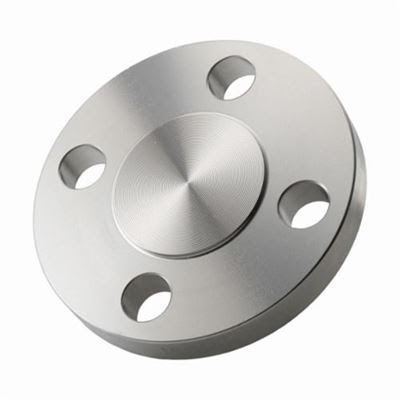
  Blind flange  is like a flange cover, also called blind disk or flanged pipe plug. Blind flange has no holes in the center, for to seal the pipe opening. So it’s function is the same as the pipe plug or the pipe cap. The difference is blind flange is a detachable equipment, easy to replace or do maintenance. Where to use blind flanges? The blind flange’s the major function is totally to separate the production medium. Which preventing the shut-off valve close not tightly, then affecting production, and even causing accidents. At the location where is requires isolation should place the blind flange, such as at the equipment nozzle. Between the front and rear of the shut-off valve or between the two flanges, it is often recommend to use a figure 8 blind flange (figure-8 blank); For single-use parts such as pressing and purging usually use common round blind flange. Sealing Surface There are many types of sealing surfaces, such as flat, convex, concave and convex, grooved surf...

Top 6 Common Flange Types

图片
  The most used  flange  types according to ASME B16.5 are: Welding Neck flange, Slip On flange, Socket Weld flange, Lap Joint flange, Threaded flange and Blind flange. Slip-on Flanges  - are all bored slightly larger than the O.D. of the pipe. Weld Neck Flanges  - is normally referred to as the high hub flange. Blind Flanges  - available to seal both pipes and vessels Lap Joint Flanges  - available in a range of sizes to pair with stub end fittings for easy dismantling Threaded Flanges  - engineered to fit pipes with external threads for weld-free fits Socket-weld Flanges  - designed with a socket fit and top weld for ideal inner flow in pipe systems Custom pipe flanges can be manufactured from a wide variety of  materials  and material grades. Carbon Steel flanges - the main material is carbon steel flange or end flange connectors. Stainless Steel flanges - F304 F304L F316 F316L 316Ti, Copper etc. Alloy Steel flanges- accord to AS...